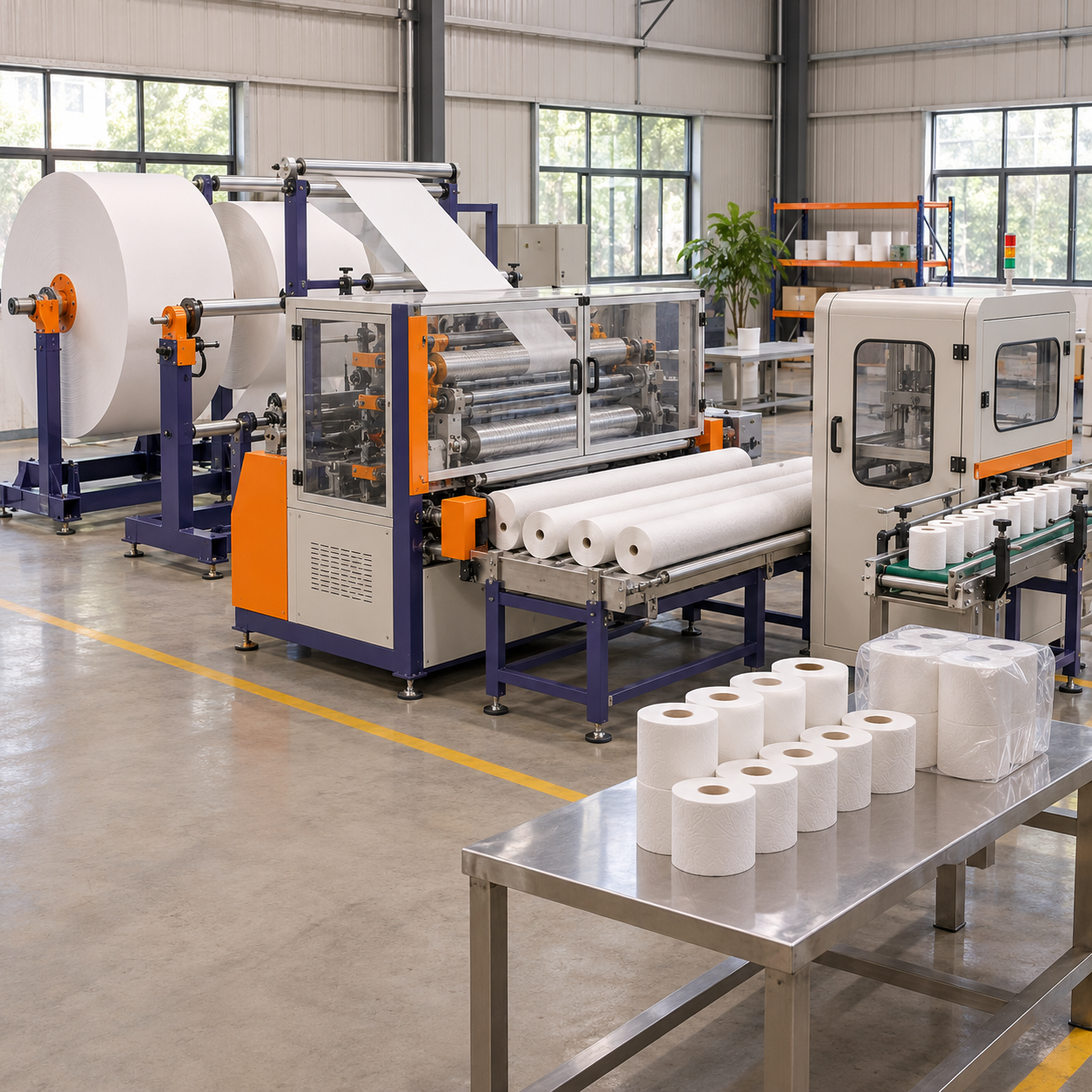
1. Define the product before choosing the machine
Machine sourcing from China to Nigeria starts with what you intend to make. Write down the raw material, finished product, pack size, target quality and customers you plan to serve. A machine name is only a starting point: two flour mills may accept different materials, produce different particle sizes and need very different preparation equipment. A tissue converting line starts with jumbo tissue reels; a paper mill starts much further upstream. Confusing those boundaries can leave an expensive gap in the factory.
Prepare representative samples, photographs, drawings or measurable product specifications. State which properties must be achieved and which can vary. For food, this might include moisture, particle size, texture and package weight. For plastic bottles, it may include neck finish, bottle dimensions and the intended contents. Ask the supplier to explain any assumptions about input quality. When you source machines from China, the written brief should describe your Nigerian operating conditions as clearly as the desired product.
2. Decide between a standalone machine and a complete production line
Map every step from incoming material to a product ready for sale. Include receiving, sorting, washing, preparation, processing, cooling or drying, inspection, packing and storage where relevant. Beside each stage, record whether you will buy equipment, use existing equipment or do the work manually. A quotation described as a complete line may cover only the central processing steps. Ask for a process flow diagram, an itemised equipment list and a clear statement of what enters and leaves the quoted system.
Check the less visible dependencies: conveyors, hoppers, tanks, compressors, air treatment, chillers, boilers, dust extraction, coding equipment, weighing scales, tooling and electrical distribution. Some production lines need these; others do not. Confirm who supplies every required item and who connects it. Match discharge heights, transfer methods and control interfaces between machines. A missing transfer conveyor or incompatible bag size can prevent equipment that works individually from operating as one useful line.
3. Specify saleable output and identify the bottleneck
Capacity must have a basis. Ask whether a quoted kilograms-per-hour figure refers to wet input, dried output, extrusion throughput or finished packed goods. For bottle blowing, state the bottle size and mould configuration. For tissue converting, distinguish rolls per minute from finished packs per hour. Request the material, product settings, staffing and utility conditions used to achieve the claimed rate. A catalogue maximum without those conditions is difficult to use in a Nigerian factory plan.
For illustration, a target of 800 kilograms of packed product during an eight-hour shift means an average of 100 kilograms per hour across the whole shift. If cleaning, start-up and planned breaks leave six production hours, the running average needed becomes about 133 kilograms per hour before allowing for rejects. Those figures are arithmetic examples, not an equipment recommendation. Compare each stage against the same saleable-output target. For batch dryers, include loading, drying, cooling and unloading time rather than multiplying tray capacity alone.
4. Compare quotations against one technical specification
Send the same request for quotation to each candidate supplier in China. Use a comparison sheet covering model, working dimensions, output basis, product-contact materials, motors, drives, controls, safety features, tooling and included accessories. Where a component brand matters, record the exact series or acceptable equivalent. Ask which specifications are guaranteed, which are estimates and which depend on a sample trial. Keep drawings and revisions attached to the quotation so a later substitution is visible.
Separate the base machine price from optional automation, packing, inspection, inland delivery, installation support and spare parts. Record the quotation currency, validity, lead time, payment stages and the named delivery term and place. An EXW factory quote and an FOB port quote have different cost boundaries. Ask what happens if a test fails or the specification changes. Obtain written approval before accepting substitutions; a similar-looking machine may have a different drive, usable width or cleaning arrangement.
5. Verify the supplier and the proposed build
Establish the legal entity offering the equipment, its role in the order and the beneficiary receiving payment. A manufacturer, integrator and trading company may each have a role, but you need to know who is responsible for design, assembly, performance and warranty. Ask for evidence of relevant production capability, the proposed build location and experience with the process you need. A marketplace profile or polished factory video does not establish that the quoted configuration has been built and tested.
Verification should follow the risks in the purchase. A visit can check the site and equipment under construction; a technical review can check the proposed design; a witnessed test can check agreed performance. These are different tasks. Specify the inspection scope and evidence required before appointing anyone. Keep a record of company details, invoice revisions and authorised contacts. Confirm any change of beneficiary through a trusted channel before payment. Sure Imports can discuss the sourcing and checking scope for your project before you proceed.
6. Agree the China factory acceptance test before paying
Define a factory acceptance test, or FAT, as part of the order specification. State the input material, operating settings, test duration, sampling method, acceptable output and reject limits. Use your representative material where practical, or document precisely how a substitute differs. A short empty-machine run can demonstrate motion, but it does not establish production capacity, product quality or stable running. For a production line from China, test the connected stages that determine the promised output.
The test record should identify the actual equipment, serial or build references where available, configuration, instruments and observed results. Include start-up, normal running, stoppages, changeover and cleaning checks where relevant. Agree how defects will be recorded, corrected and retested. Link payment milestones to evidence and acceptance terms that both parties understand. Remote witnessing may be useful, but require continuous context and readable measurements; edited clips alone can conceal interruptions or a different machine configuration.
7. Prepare the Nigerian site, power and utilities
Obtain a load schedule and utility schedule before ordering. Confirm the required voltage, phases, frequency, running loads, starting behaviour and simultaneous loads with the supplier and a qualified local electrical professional. Include heaters, compressors, pumps, dryers and packaging equipment in the calculation. Installed motor kilowatts alone are not a generator specification. The starting method, power factor, load sequence and site conditions affect the power system you need. Plan cable routes, isolation, earthing and protective devices as part of the installation.
Check floor loading, foundations, drainage, ventilation, clear height, access doors and space for maintenance. A machine may fit on the floor plan while leaving no room to remove a shaft or change tooling. Confirm water quality and consumption, compressed-air pressure and flow, cooling requirements and fuel needs where relevant. Allow for raw-material storage and finished-goods movement. Ask for utility connection drawings early, then have local professionals validate the site against the final equipment configuration before it ships.
8. Budget the landed and commissioned cost
The machine price is one part of the investment. Build a budget that separates equipment, tooling, critical spares, verification, testing, export packing, China inland movement, freight and insurance. Add the Nigeria-side charges applicable to the shipment, inland delivery, unloading and rigging. Then budget site preparation, electrical work, utilities, installation, training and trial material. Working capital for inputs, packaging and early production is a separate need. Keep assumptions and contingencies visible instead of hiding them in a single equipment figure.
Request packed dimensions, gross weights and package counts before comparing freight options. A container that holds the equipment may still require special loading or unloading arrangements. Use a dated exchange-rate assumption and identify which expenses remain exposed to currency changes. Do not apply a generic duty percentage to every machine: classification and applicable charges depend on the exact equipment and current rules. Confirm a shipment-specific estimate with the relevant professionals before committing to a purchase or delivery deadline.
9. Confirm import documents and product requirements
Distinguish importing the equipment from authorisation to manufacture or sell its output. The requirements for the machine shipment and the requirements for a food, cosmetic, medical or other regulated finished product can be different. Give your clearing professional the technical description, function, model, condition and supporting documents so classification can be checked. Confirm the applicable import process and documentation before shipment. Avoid assuming that an exemption, certificate or classification used for another buyer automatically applies to your order.
Use the Standards Organisation of Nigeria and the relevant sector regulator as primary starting points for current requirements. SON’s guidance distinguishes conformity programmes and their scope; NAFDAC publishes product-registration information for the categories it regulates. Environmental obligations may also depend on the process and location. Ask the responsible authority or qualified adviser to confirm your specific case. A machinery supplier’s compliance claim should be treated as information to verify, rather than approval to operate a factory in Nigeria.
10. Plan packing, freight and arrival handling
Approve export packing suitable for the equipment, route and expected handling. Ask how delicate controls, exposed metal, tooling and loose accessories will be protected and identified. Obtain a packing list that lets the receiving team reconcile every crate and component. Confirm lifting points, centre of gravity, gross weight and any restrictions on orientation. If a line will be dismantled for transport, require labels, connection references and assembly documentation before it leaves the factory.
Match the freight plan to the actual packed shipment rather than an early catalogue estimate. Check whether dimensions or weights create special handling requirements, and clarify insurance coverage and exclusions. Plan the final delivery route, site access, unloading equipment and temporary storage in Nigeria. Assign responsibility for checking visible damage and shortages on arrival, documenting discrepancies and notifying the relevant parties promptly. Keep manuals, drawings, software backups and spare-part records accessible independently of the crates.
11. Agree installation, training and after-sales support
Commissioning is the transition from delivered equipment to a working production process. Define who assembles, connects and starts the equipment, which local trades must be ready, and what the supplier’s engineer or remote team will do. Record travel, accommodation, interpretation, daily charges and schedule assumptions if on-site support is proposed. Ask what must be completed before the engineer arrives. A delayed power connection can consume an installation visit without producing an accepted line.
Agree a site acceptance test using the installed line, actual utilities and intended material. Keep the factory test and site test requirements consistent while recognising the different conditions. Training should cover normal operation, safe shutdown, changeovers, cleaning, preventive maintenance and fault diagnosis. Obtain a parts list, drawings, control backups and warranty terms, including exclusions and the process for support requests. Identify critical wear parts and long-lead components before shipping so a minor failure does not stop the factory for weeks.
12. Send Sure Imports a machine sourcing brief
Choose the level of automation around the whole workflow. A faster central machine can increase manual handling, packing labour or storage requirements if the next stage cannot keep up. Ask how many operators are needed at normal output and what each person does. Confirm whether that staffing estimate includes feeding, inspection, packing and moving finished goods. Compare changeover time as well as running speed if you expect to make several products on the same equipment.
For food and hygiene production, discuss access for cleaning, product-contact surfaces, seals, drainage and the risk of material remaining inside the equipment. For dusty milling processes, ask how dust is collected and how operators will maintain the system. For cutting, forming and moving machinery, review guarding, emergency stops and the safe method for clearing a blockage with your local technical team. Include the required training and operating instructions in the purchase scope rather than leaving these decisions until arrival.
To start sourcing machines from China through Sure Imports, send the product you want to make, your input material, required saleable output and installation city in Nigeria. Include a sample specification, photos or drawings if available. Tell us whether you need a standalone machine, a replacement stage or a full production line. State the utilities already available, building constraints, target timing and budget range. If you have quotations, share the full scope and technical attachments rather than only the quoted price.
Use the machine-specific guides on this page to refine those details. A fish-feed line, a tissue converting line and a palm-oil processing system require different questions, tests and supporting equipment. The next useful step is a written sourcing scope: what will be searched, compared, checked and arranged, with the fees and responsibilities confirmed for your project. Bring unresolved questions into that discussion early. A clear brief makes supplier comparison more useful and helps expose missing costs before money is committed.
Your request-for-quotation checklist
- Finished product, raw material and representative samples
- Saleable output per hour or shift, pack size and quality limits
- Process flow, included machines, auxiliaries and exclusions
- Power, water, air, heat, floor space and access constraints
- Factory test criteria, evidence, corrections and retesting
- Delivery term, packing, freight assumptions and payment milestones
- Installation, site acceptance, training, warranty and critical spares
Useful planning tools and official sources
Estimate shipment volume with our CBM calculator, outline costs with the landed-cost estimator and explore the generator-sizing tool. Have final technical and import requirements confirmed for your project.
Check current guidance from the Standards Organisation of Nigeria, SON’s MANCAP programme, NAFDAC product registration and NESREA’s laws and regulations where applicable.